13. Memory Management
Real Time Operating Systems (RTOS) •
Summary
- Paging partitions virtual and physical memory into fixed-size pages.
- Superpages in x86-64 omit last-level page table for up to 2 MiB pages.
- 64b Intel page table entry allows for bigger virtual addresses.
- Future advancements may include hardware bounds checking for security.
MMU Goals
- Relocation for independence from physical address
- Why?: Program may not load in the same location every time, swap may no reload to same location..
- Protection with hardware checks
- Sharing when needed
Mechanisms
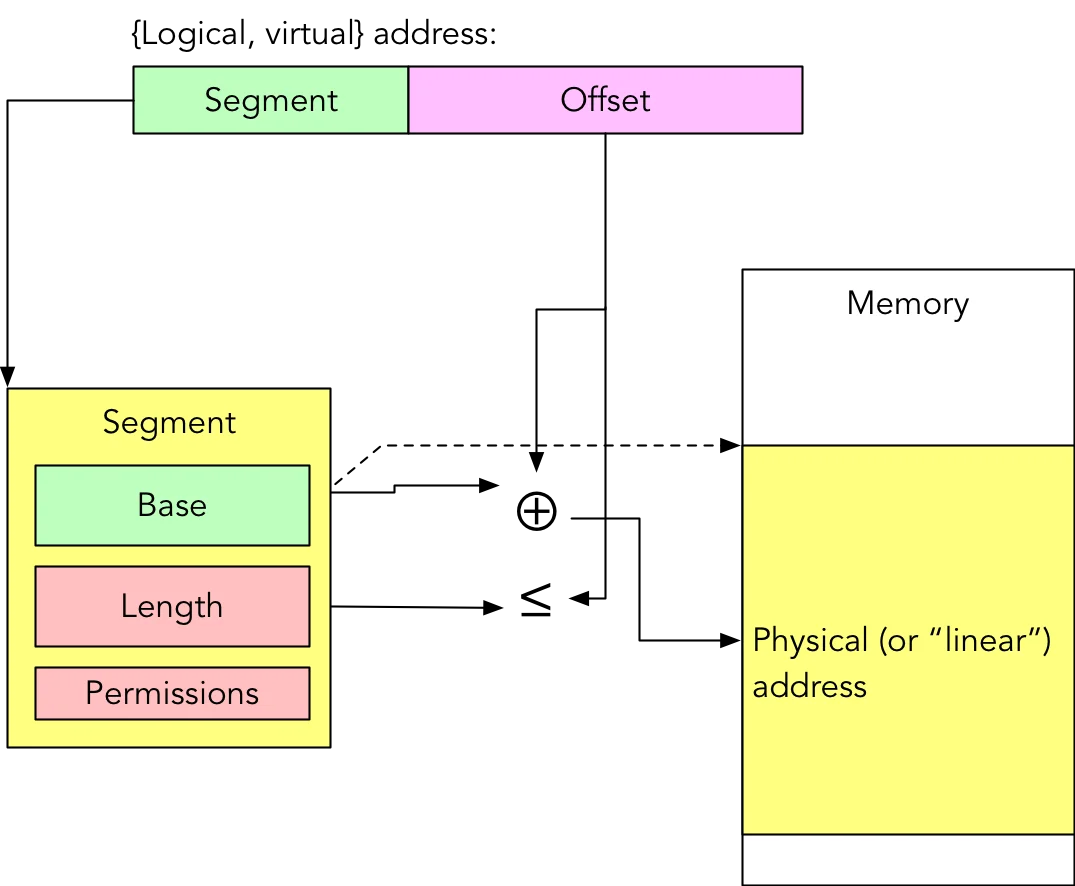
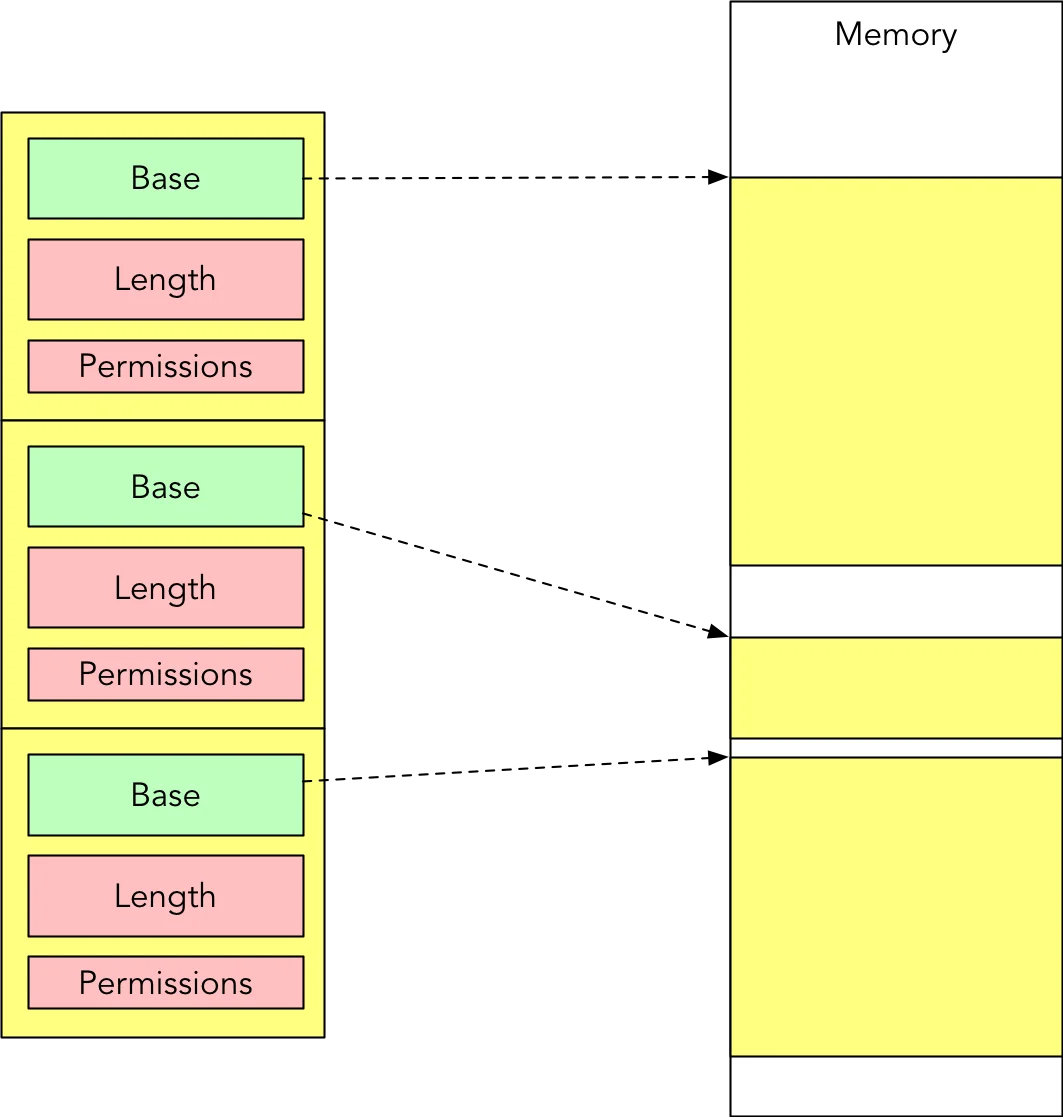
- Segments: Variable-length blocks of memory, programmer-visible and controllable
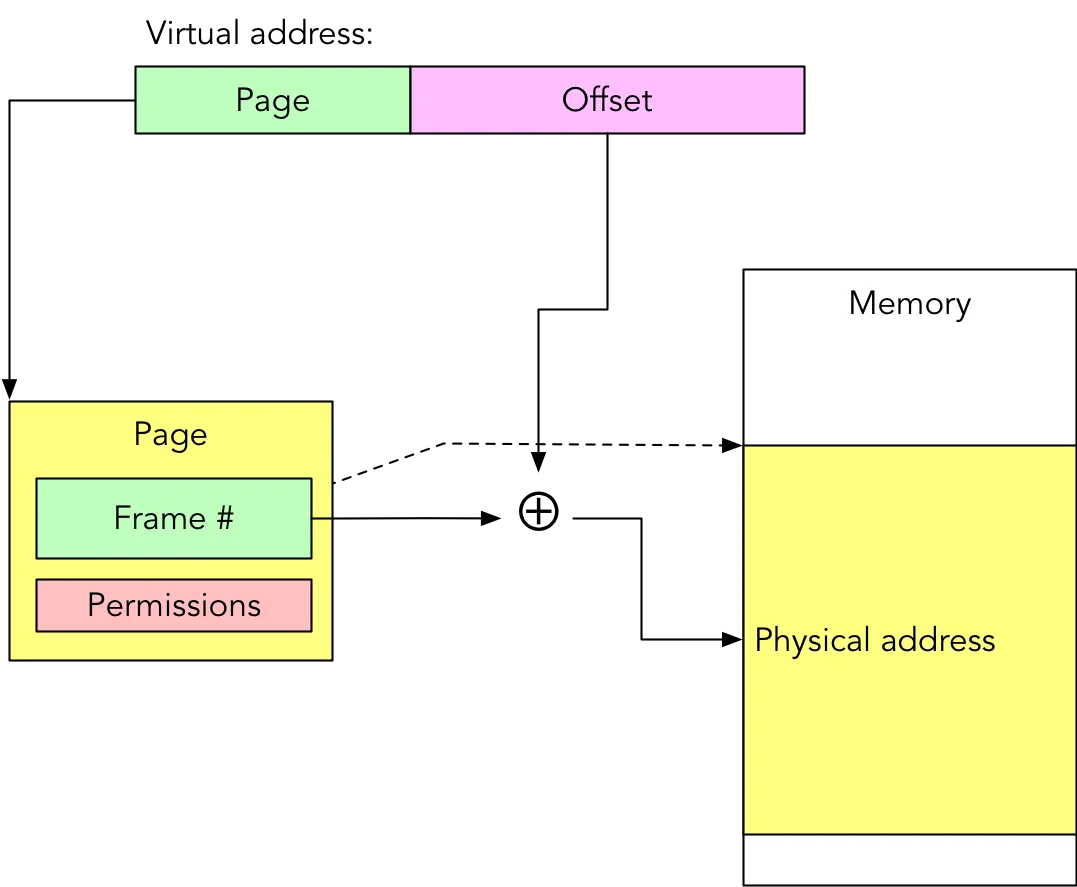
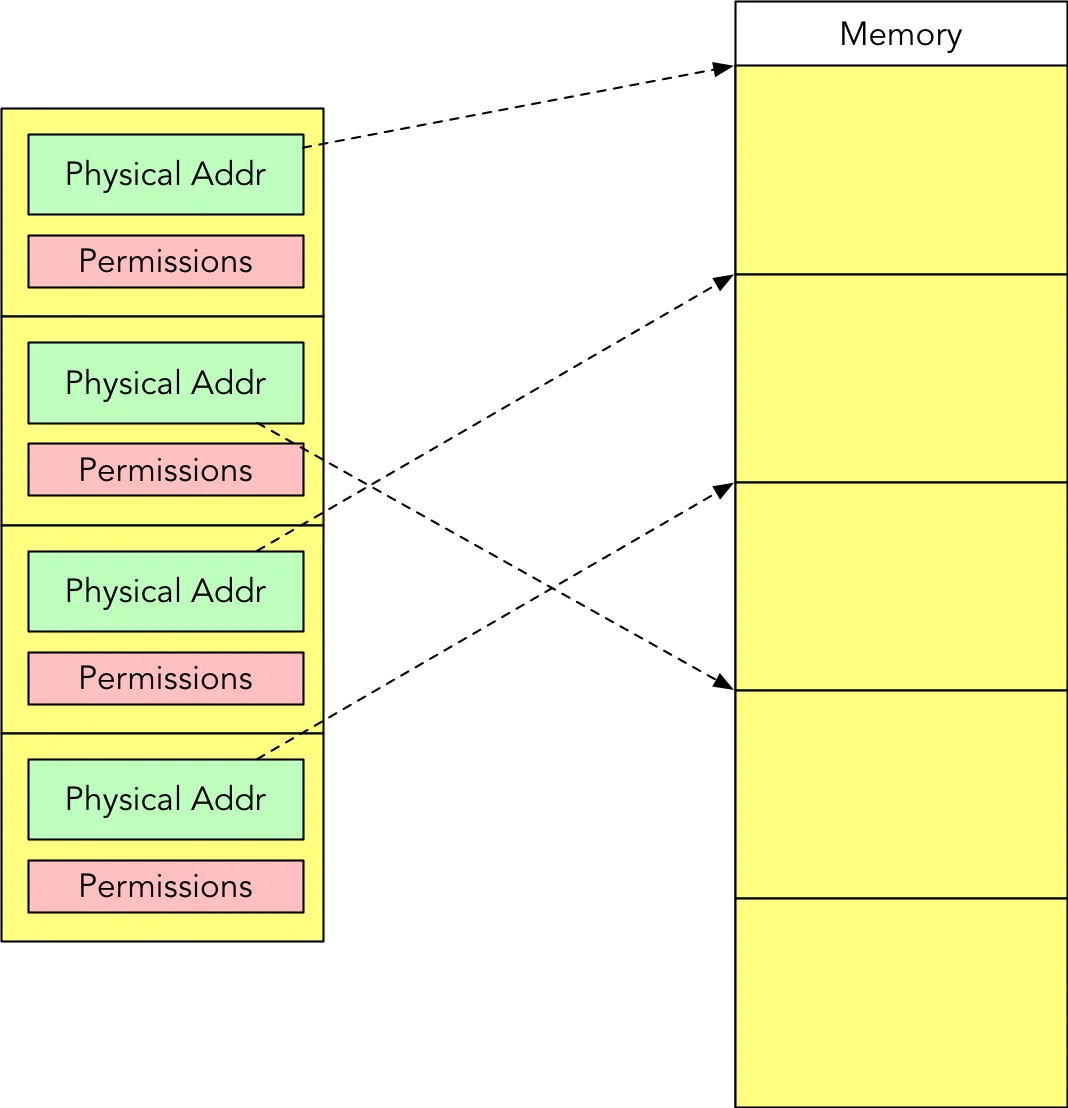
- Pages: Fixed-length blocks of memory, invisible to programs
- Mechanisms can be combined
Segmentation
 {width=350px}
- Divide process into unequal size segments with different values for base, length, and protection
- Programmer must be aware of maximum segment size
- e.g., 64 KiB on 8086/8088!
- Introduced in 1960s with systems like Burroughs B5000 and Multics
- Intel 8086/8088 used fixed length, overlapping segments like…
- CS: code segment
- DS: data segment
- SS: stack segment
- ES: extra segment
- x64 architectures simplifies to
- FS, GS still work
Paging
 {width=350px}
- Partition virtual memory into fixed-size pages and…
- …physical memory into frames of the same size
- Don’t need to be stored in contiguous frames
Important Differences
 {width=350px}
 {width=350px}
Segmentation VS Paging
- Size:
- Segments are blocks of memory with variable lengths
- Pages are fixed length
- Visibility:
- Segments are visible to programs
- Pages are not