9. Kernel Architectures and Interrupts
Real Time Operating Systems (RTOS) •
Kernel Architectures
Monolithic Kernels
- An OS architecture where the entire OS is working in kernel space
- Differs from other architectures in that it alone defines a high-level virtual interface over computer hardware
- Syscalls implement OS services
- Device drivers can be added as modules
- Some examples:
- BSD, Linux, Solaris, other UNIX
- MacOS and Windows (kinda)
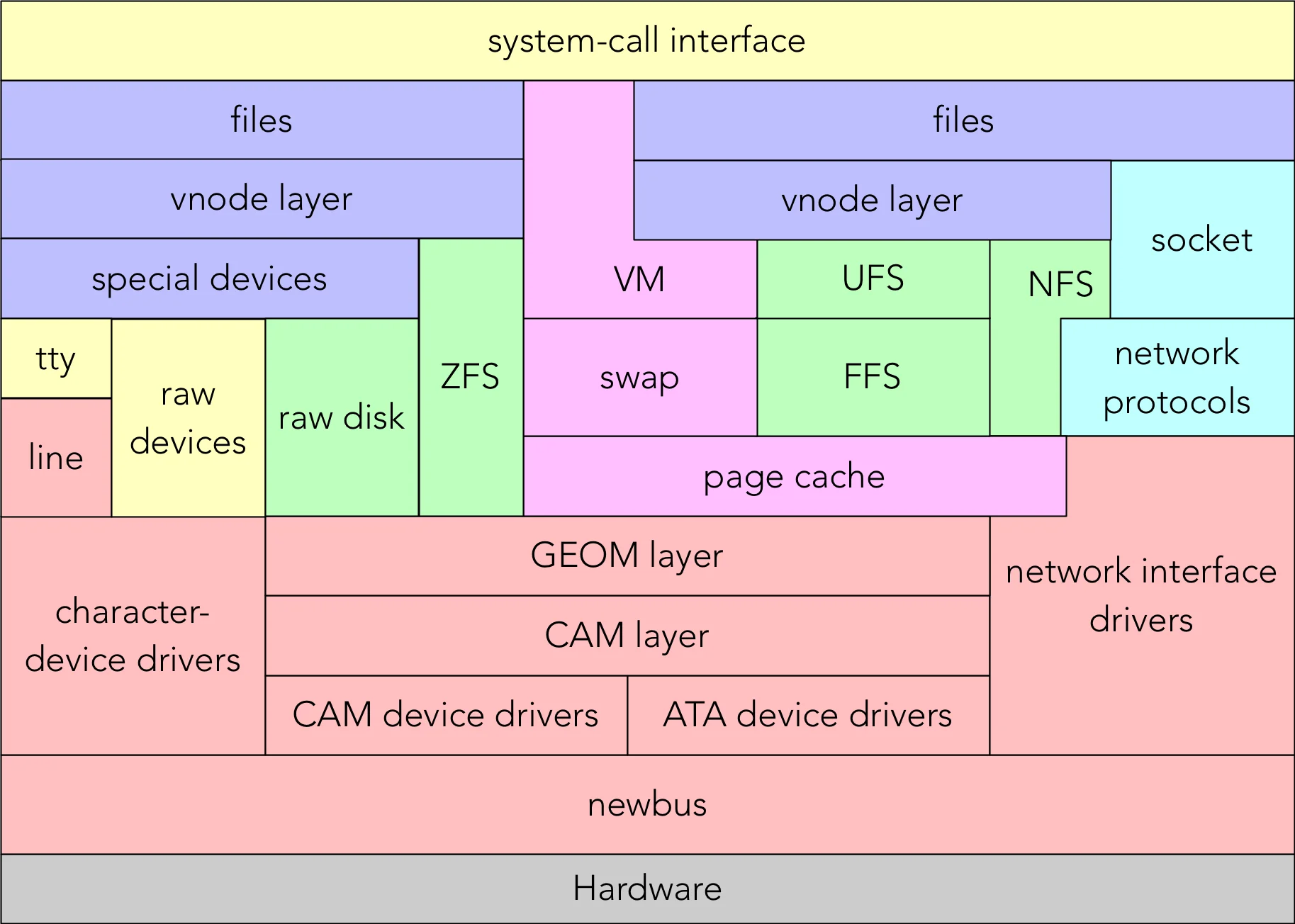
- FreeBSD I/O architecture:
Some questions…
-
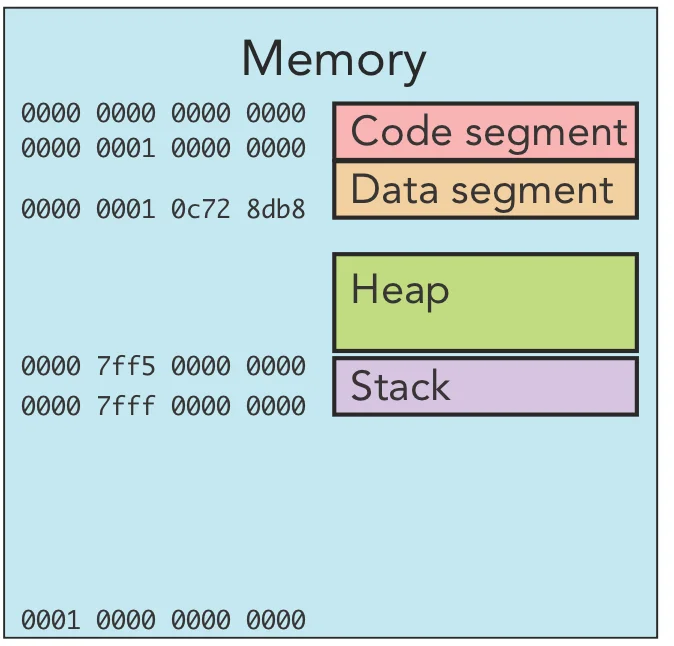
What happens when your (user-mode) program dereferences an invalid pointer?
- Program sent
SIGSEGV: segmentation fault… - meaning no such virtual address
- i.e., if unhandled, terminate
- Program sent
-
i.e., User-mode program errors trigger segmentation faults, handled by the OS kernel
-
What might happen if kernel code dereferences a bad pointer (e.g., a previously-freed object)?
Microkernels
- Minimalistic Kernel Design
- Delegates most task to user space processes
- Microkernels like MINIX are popular, possibly embedded in Intel Platform Controller Hub.
- MacOS and Windows NT use hybrid kernel designs (almost micro-kernels).
Functions:
- Control address spaces (low-level memory management)
- Inter-process Communication (IPC) for message passing
- Handling I/O and interrupts by sending messages to assigned ports.
Pros:
- Uniform interfaces through message passing
- Extensibility for easy addition/modification of services
- Flexibility to add/remove services as needed
- Portability with less hardware-specific code
- Reliability as it’s easier to get right and restart failing services
Cons:
- Performance impact due to increased message passing
Windows?
- Windows NT incorporates microkernel elements.
- Components like…
- Executive
- Hardware Abstraction Layer
- device drivers
- and graphics systems follow microkernel design principles.
- Despite being designed as a microkernel, Windows NT also includes non-microkernel components.
Instruction Processing
- Typically processes one instruction at a time in a sequential manager
- Pipelining used for efficiency by overlapping instruction execution stages
- Interrupts may occer at any time, requiring processor to handle them during instruction processing
Interrupt Handling
- When an interrupt is triggered, hardware disables interrupts to prevent further interruptions.
- Why? To prevent further interruptions during handling the current interrupt.
- Hardware saves the program counter (PC) and Processor Status Word (PSW) or Current Program Status Register (CPSR).
- Why? To preserve the state of the interrupted process..
- …which allows the processor to then resume execution from the correct point after handling the interrupt.
- The processor locates the interrupt handler…
- How? By referencing a predefined interrupt vector table.
- …software saves additional context…
- What? such as register values, stack pointers, and other data related to the interrupted process.
- Essential for maintaining the state of the interrupted process and ensuring seamless transition back to execution.
- …and upon return, execution resumes.
- Hardware interrupts happen a bit, timer interrupts happen a lot
Interrupted Interrupts
- Hardware and software steps for handling interrupts effectively
- i.e., if another interrupt comes in…
- Sequential interrupts wait turn
- Nested interrupts can interrupt the interrupt